


-
Delen
-

-

-

-

Bijgewerkt 5 Dagen geleden
Rollabels: Hoe kies je de juiste constructie voor je applicatie
admin
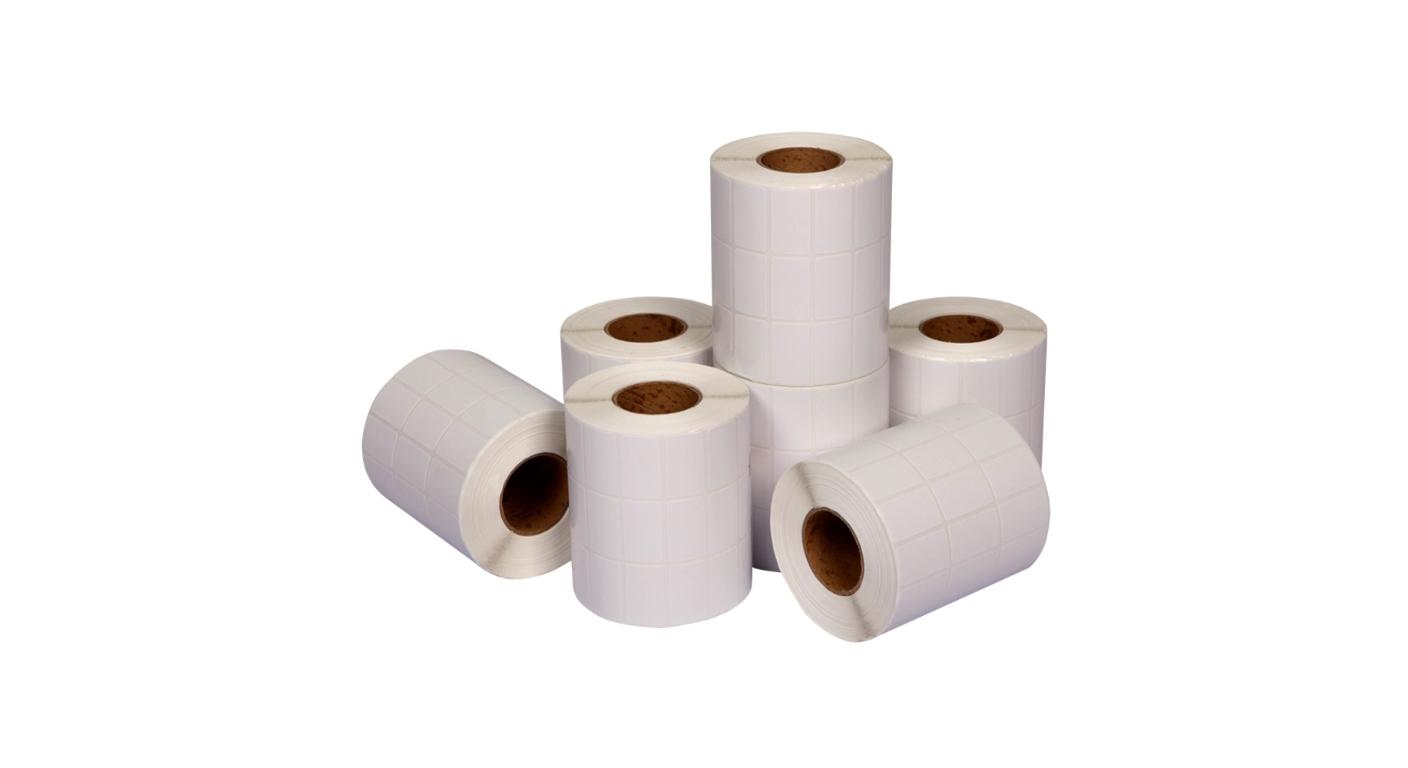
Rollabels koppelen de producten zelf aan informatie die mensen willen identificeren, Beheren en verkopen producten. The shipping label needs to stay scannable during shipping and the product label may have to maintain its look during storage and multiple touches.
The journey is the key to understanding a roll for packaging buyers and operations teams, as it is essential to pick the right material to package the product. A perfect label can still peel off of a bottle and jam in an applicator. The most valuable specification accordingly ties the package, lijm, printed information and equipment together as an operating system.
Make a definition of What the Label Must Survive.
To begin with the purpose of the label and the working life that is expected. Requirements for a parcel label that is used for several days are different than those of a label that is expected to be readable for months, as part of an inventory. With product decor, there is an added consideration – needing the product to look the same when viewed and felt by customers.
Explain how it goes from the application to disposal. Think transport, refrigeration, sun, rubbing and cleaning products/water. Differentiate between the routine exposures and occasional exposures, to allow the supplier to recommend a proportionate construction.
There are different applications that can be discussed as a basis of Jinbao's label sticker range. But a general product class should result in a material recommendation, based on a specific performance information.
Let the Package Surface Guide Material Selection be your guide.
The visible surface (Facestock) displays the print and adds to the appearance, Stijfheid, and handling resistance. Paper can be used for dry cartons and for many indoor uses. In situations where there are extra demands, synthetic films might be more suitable when moisture, tearing or repeated handling are involved.
As important as the material, is the package shape. A label that must conform to a narrow bottle must have a certain degree of flexibility, and a large flat carton has a different set of issues for the label. Label flexible by squeezeable containers can be bent many times after application.
Where possible send the supplier a real package. Determine what it is made from, how it feels, if it is curved and if there is any coating. The sample tested on clean glass cannot provide information on the behaviour of the same label on a textured carton or flexible plastic pouch.
Choose Adhesive for Application and Service Conditions
The first criteria for adhesive selection is the condition of the surface when the adhesive is applied. Stof, olie, condensation and low temperatures can hinder the bonding process. Labeling used for refrigerated storage may still need to be applied to a clean dry package at a minimum temperature.
Differentiate between application temp and service temp. The first involves the bond formation, the second involves conditions post-application. Request lower and upper limits for the proposed construction.
Set guidelines for removal, ook. A permanent shipping label and a removable promotional sticker are used for different reasons. Remove and test after desired dwell for residue and package damage. The surface, Blootstellingsomstandigheden, and removal behaviour are required to know the meaning of a description such as “strong adhesive”.
| Observed Problem | Possible Cause to Investigate | Useful Comparison |
| Corners lift after application | Surface contamination or unsuitable construction | Clean and untreated package samples |
| Label wrinkles when squeezed | Insufficient flexibility | Filled packages under repeated compression |
| Printed image rubs away | Unsuitable print and surface combination | Alternative ribbon or coating |
| Removable label leaves residue | Adhesive and dwell-time mismatch | Removal after different storage periods |
Identify the differences between Roll Format and Printing Technology.
Roll labels” refers to the way the labels are provided, not the way they get an image. They can be blank for variable details, fully printed for the branding or pre-printed with space for batch details.
Directe thermische labels are used to form images from a heat sensitive coating, without a ribbon, for appropriate short-life applications. The choice of which is suitable depends on the exposure conditions and desired image life.
Thermische overdrachtlabels, Aan de andere kant, use a ribbon. Durability is dependent upon the ribbon being matched to the label surface and environment.
Not all blank rolls will be compatible with all printers. Before purchasing production volumes, verify the printing technique, compatibility of materials, coating or surface treatment. When using thermal transfer, test the proposed ribbon with the label.
Design and make the Roll Around the Equipment
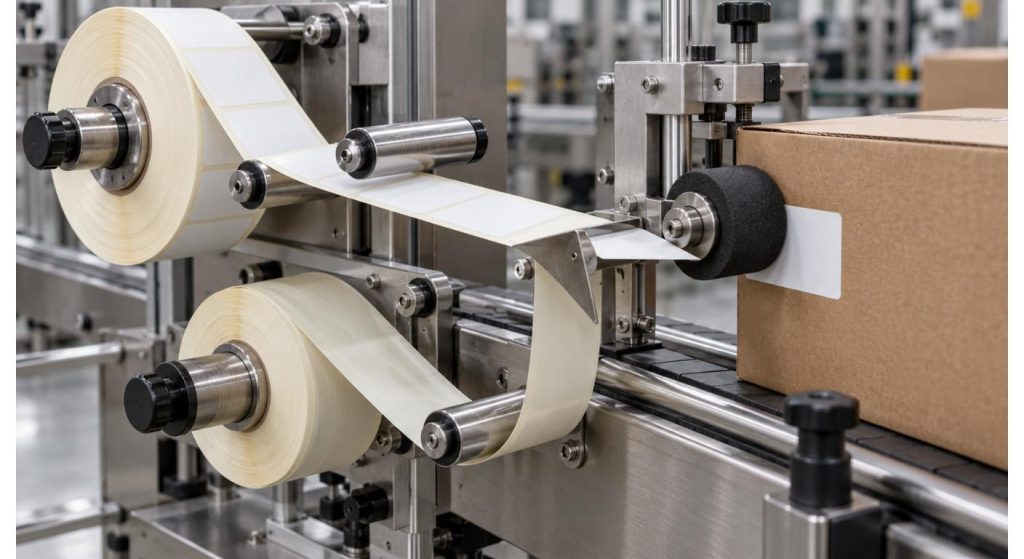
Label width and length are only part of equipment compatibility. The printer/applicator should also have the appropriate liner width, kerndiameter, maximum roll diameter and winding configuration. Improperly constructed rolls can negatively affect a proper labeling process.
Check to see if labels are pointing in or out and which side the edge is on that goes into the machine. If automatic application is desired, ask for a winding diagram, don't take verbal description. The orientation of the label has to be the same as the package presentation on the line.
Attention also must be paid for detection. Gaps, black marks or other sensing arrangements shall be appropriate for the equipment. Specific sensor capabilities may be needed for clear labels. Note these details with the label size to avoid being tricked into approving a roll that fits in, but not in a way that it can register for operation.
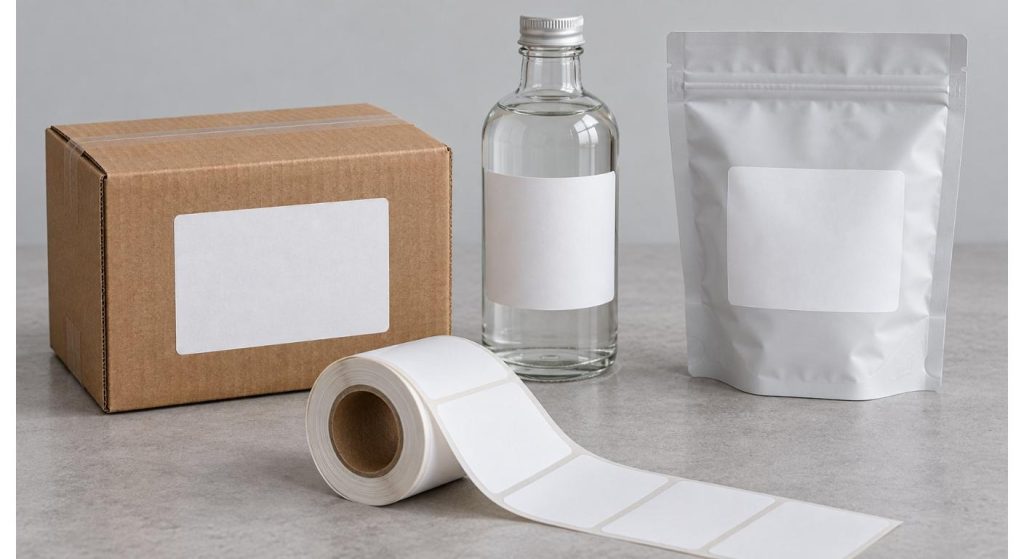
Selecting and designing information that changes.
Packaging Artwork & Operational Data should be integrated. Product names and graphics are static, Batchnummers, Data, logistics information frequently change. Determine what the supplier prints and what your team puts on it afterwards.
In the evaluation of Op maat gemaakte bedrukte labels, set aside appropriate space to accommodate variable information and determine that the space is appropriate for the type of printing that will be used. A decorative coat may impact the print adhesion and/or thermal transfer performance.
Assess the completed label on actual package. Even if artwork is clear on screen, Kromming, reflections, and placement can contribute to making it hard to read. Avoid folds and sharp bends on barcodes and test barcodes post application. If the customer or distribution network has stated that the barcode needs to be verified, agree the method that should be used prior to production.
Verify Complete Label on the Actual Line
A good test is one that includes the material, lijm, artwork, the printer settings, and the package. Testing each component individually can allow problems to be missed that are caused by their interaction.
Test representative samples using normal production conditions. Observe feeding, registratie, dispensing, application and scanning. Volgend, subject marked packages to the conditions outlined in the beginning, with agreed upon procedures and inspection periods.
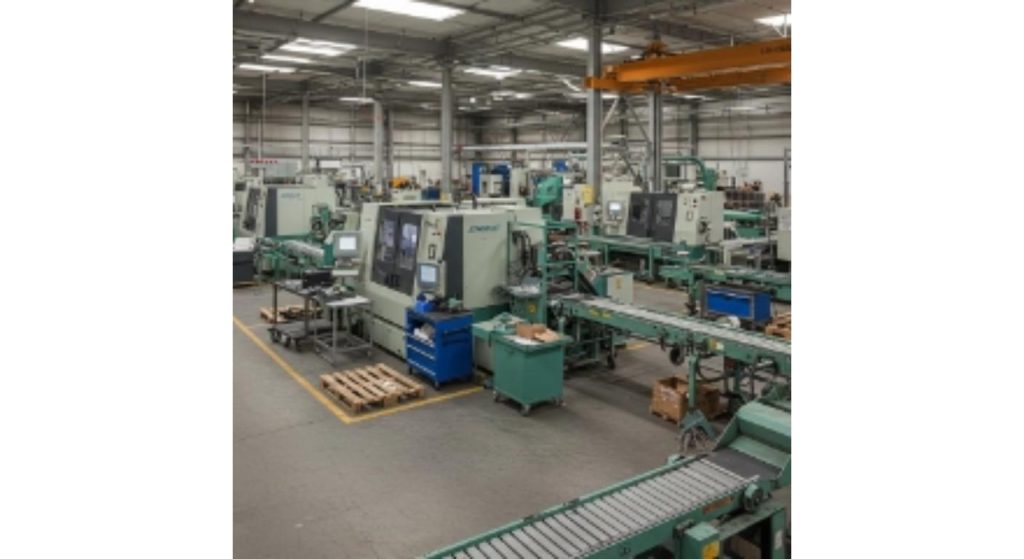
Write down lifting edges, rimpels, damages to the images, sticky residue and rejected labels. Don't just compare the quotation, take into consideration total operating cost, ribbon use, set up waste, relabeling, and downtime.
Continue approved construction code and art work revision. Agree on what changes are needed for another trial; especially substitutions of facestock, lijm, liner or ribbon. This makes it more reliable to keep buying it when similar products are available and look alike.
| Trial Item | Result to Record | Approval Evidence |
| Equipment run | Applied labels / attempted labels | Production trial log |
| Barcode performance | Successful scans / scan attempts | Scanner or verifier record |
| Environmental exposure | Condition and inspection time | Dated sample photographs |
| Removal, if required | Residue and package damage | Retained comparison samples |
Conclusie
The labels that are rolled are effective; they stay on, are readable, and compatible with the process that rolls them. Start with the package and its trip, then select the same construction, printing technique and roll form. A realistic trial links those decisions together and provides buyers with a real trial on which to approve production.
Veelgestelde vragen
Q1. Do roll labels have to be thermal labels?
Different materials and printing processes can be used with No. Roll format. Before ordering stock you should be sure how the labels will be printed.
Q2. Does waterproof label mean it is suitable for refrigeration?
Nee. Moisture resistance does not give low temperature adhesion. Verify application conditions, service temperature and performance on actual container.
V3. Which adhesive can be used with all packaging materials?
Do not assume so. The bonding performance can be different due to surface texture, Verontreiniging, curvature and type of plastic.
Q4. Why is it important to wind in the correct direction?
It dictates the path in which the label is introduced and its path towards the package. Even if they fit in size, they may not be able to be applied if they are arranged incorrectly.
V5. What information should a supplier get prior to a quote?
Give the size of labels, printing packages, Blootstellingsomstandigheden, printing method and equipment needs. Include art and actual sample package, if available.
We gaan terug naar binnen 24 Uren
Gerelateerde artikelen
Fabrikant van thermische papierrollen: Evalueer wat er gebeurt na de goedkeuring van het voorbeeld
2026-10-30
A4 Warmteoverdrachtspapier: Kies het juiste systeem voor kledingdrukwerk
2026-10-30
Thermisch Papier A4: Selecteer de juiste voorraad om onderweg te printen
2026-10-29
Papierrol Thermische Inventarisatie: Koppel de levering aan het echte gebruik
2026-10-29
