


-
Delen
-

-

-

-

Bijgewerkt 4 Dagen geleden
Kwaliteit van thermische papierrollen: Wat bepaalt de printprestaties?
admin
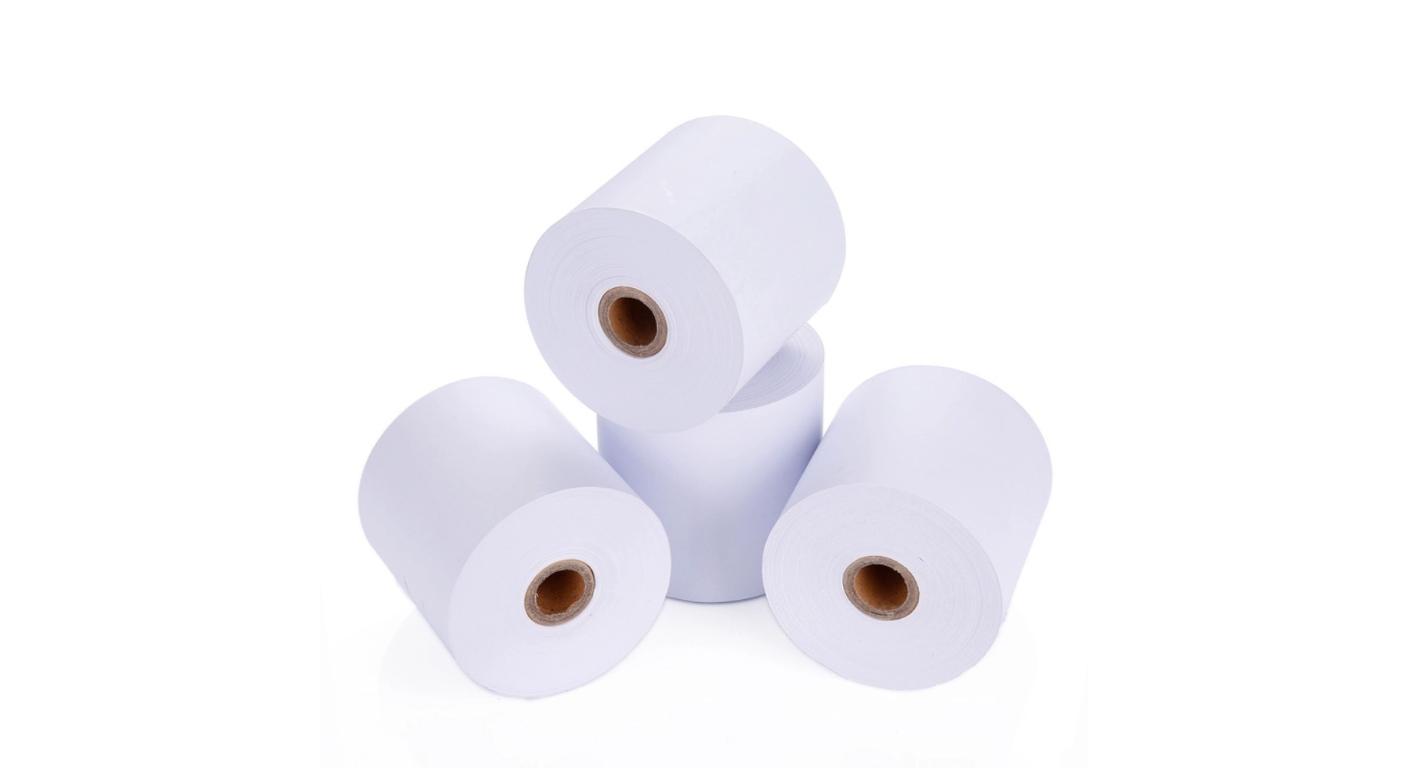
Much more goes into the engineering of a thermal paper roll than the simple white surface would indicate. The paper should respond to the heat of the printer, move smoothly through the mechanism and retain useful information after being printed. Two rolls may have the same appearance and yet have different paper grades, coatings and converting quality and thus give different results.
This knowledge is beneficial to distributors or business buyers when comparing products. Don't just use the look, thickness or scratch test to determine; look at how it forms an image and how the completed roll looks. Nor does this guide attempt to follow that path from the coated sheet to the printed record.
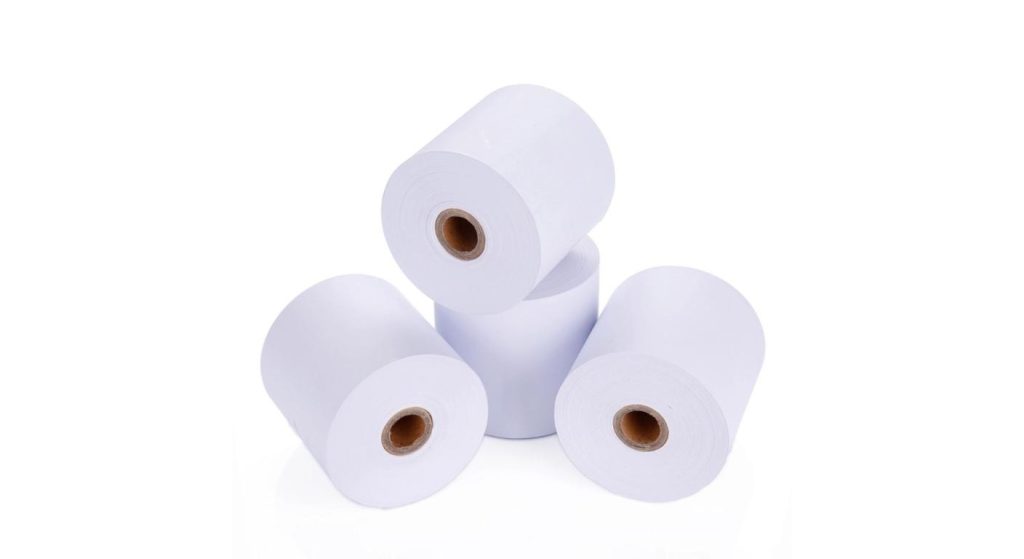
Use the information from the image to find out where it is from.
In conventional direct thermal paper, the coating on the paper is heat-sensitive, which means that it turns color when it comes in contact with heat from the printhead. The picture is created in the functional layer of the paper; daarom, the printer does not require an ink ribbon.
This sets it apart from normal paper used in impact printers and thermal transfer paper which gets an image from a ribbon. The white colour of a roll is no indicator of its printing method.
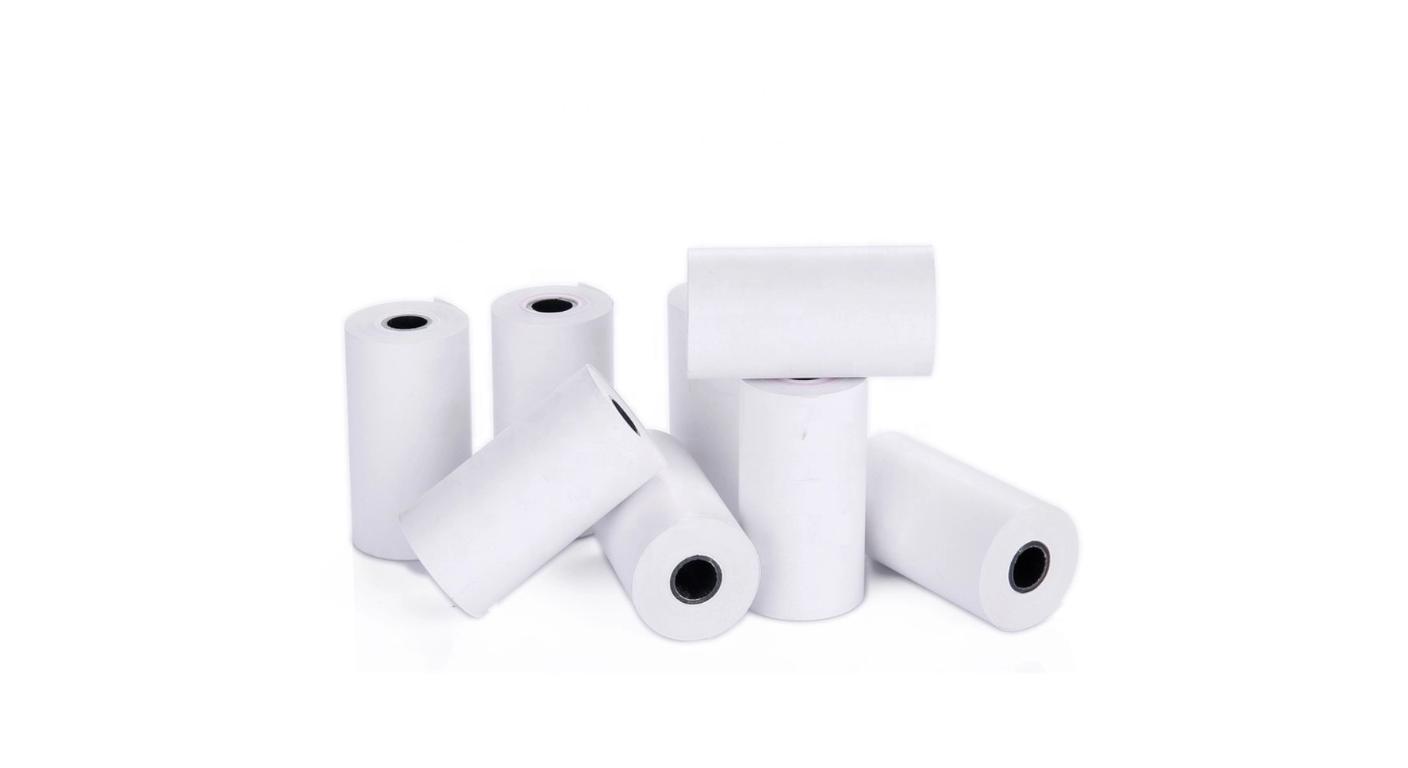
Jinbao's thermal paper roll catalog is a list of the finished products for receipt and transaction printing. Prior to comparing grades, determine that direct thermal technology is appropriate for the equipment and the document. Special marks, coatings or approved media may also be required for specialized applications and cannot be substituted by a general receipt roll.
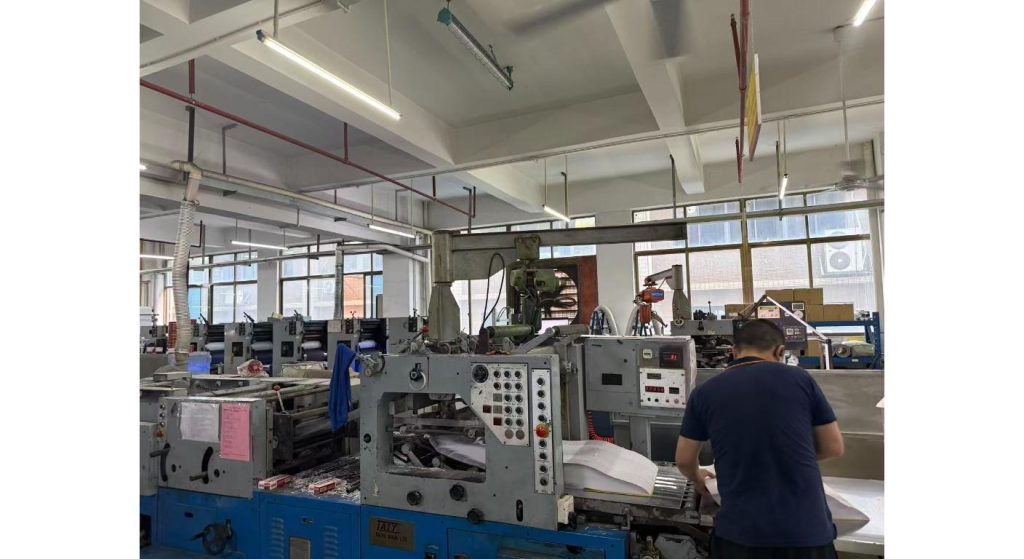
Read the names of the units of measure for paper weight and paper thickness separately.
Grammage refers to the mass per unit area of a paper (in grams per square metre). Caliper describes thickness. These measurements are correlated by design of the paper, but are not interchangeable.
The higher the grade, does not necessarily mean the darker the print or more metres or more durable under harsh conditions. Those results are dependent on other properties such as coating performance, thickness and finished roll specification.
Compare materials by their grammage and caliper. Bepaal, also, if quoted values are nominal, and what tolerances exist. If the printer has indicated a thickness range, use that as the limit. The goal is to get a paper grade that is easy to handle and print but not so heavy that it is unnecessary.
The sensitivity of a Controlled Print Setting is evaluated.
The thermal sensitivity is an indicator relating to the response of the paper to the applied heat. In de praktijk, the question is whether the proposed grade can be printed at the desired speed and energy setting and produce legible output.
Compare candidate papers, in the same maintained printer, using the same test file. Add the actual size of the barcodes and fine text and solid areas. Check the background is clean and the image is dark – good contrast with a clear background and good printed areas.
Don't aim for complete black. As the printing energy increases, a mismatch in materials or modifications in the look of narrow bar code elements can be hidden. Note settings for each result and note whether the problem is paper or due to printhead contamination or damage before discarding an entire batch.
If you're making the same comparisons over time, save a copy print made from an approved grade as a reference. Keep it safely and make a note of the date - an aged print can be confused with the first time that a particular sample is printed.

Understand the contribution of What Converting to quality
The final roll is made starting from a larger slit and rewound reel. This converting stage sets the practical properties which can be guaranteed only by the paper grade.
Jinbao's Thermische papieren jumborollen are the upstream format used for converting. When checking finished rolls, check for even edges, stability of winding, an undamaged core, and a roll shape appropriate for a printer compartment.
Loose windings, crushed cores, protruding layers or too much edge debris is something that needs to be explored. Discuss the plan for splices and how the paper will be tied to the core as this can impact the end of a roll. Overweeg "Wikkelen" as an assessment method for a feeding trial instead of squeezing the roll and making the assumption that firmness equates quality. This includes the last metres of the roll: consistentie.
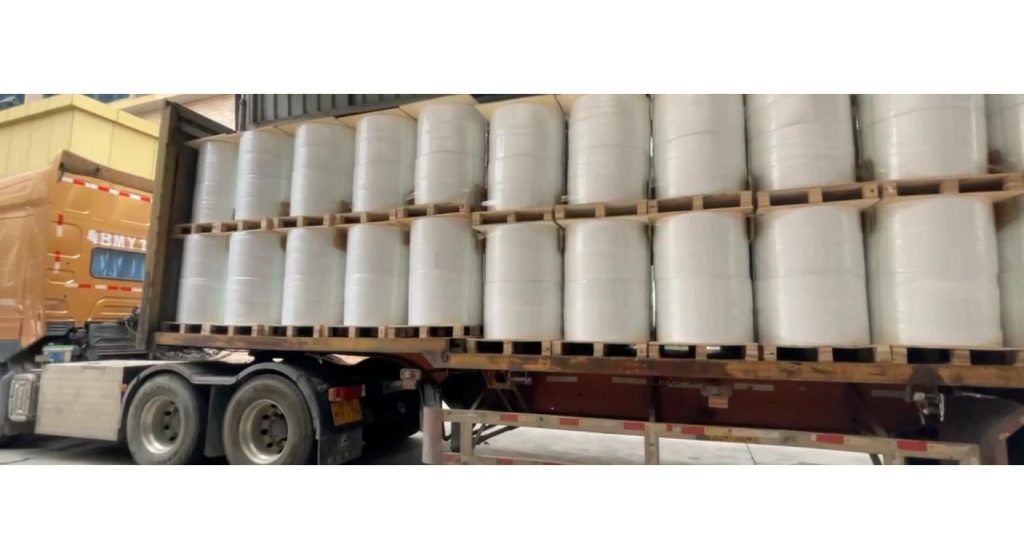
Think about how the developer is describing the PPF performance.
In some grades, protection is obtained by the application of protective coatings which enhance resistance to specific exposures. But the terms "waterdicht," "oliebestendig" en "long-life" refer to different performance questions. None of these can be considered to be a universal guarantee.
Inquire about the nature of the testing, the duration of the testing, and how the testing was evaluated. A sheet which passes the short water drop test does not necessarily pass the long water drop test, or may not have readable printing after long water drop test, abrasion or contact with cleaning chemicals.
If coating chemistry is a part of the purchasing requirement then consider Jinbao's BPA-free thermal paper rolls and ask for details with the proposed grade. A chemical-content claims does not mean image durability. Evenzo, a quality-system certificate does not count for product specific evidence. Match claims to the specific property required to the specific material being provided.
| General Request | More Useful Supplier Question |
| “Premium paper” | Which grade and measurable properties distinguish it? |
| “Long-lasting print” | What image-life conditions and assessment method apply? |
| “Waterproof roll” | Does the claim cover the paper, printed image, or both? |
| “Cleaner feeding” | What converting controls and feeding-test results are available? |
Save Unprinted Inventory and Printed Records
Thermal paper is influenced by storage prior to and following its use. Functional coating can be compromised in extended periods of heat and humidity and contact with some materials can impact a printed message. Follow the paper manufacturer’s instructions for the particular grade.
Store unused stock in original packaging until use, avoiding direct sunlight and/or local heat sources. Look at places other than the main storeroom where cartons are stored when receiving and where spare rolls are stored next to equipment.
For printed records, differentiate an image life under defined conditions from actual handling. The exposure history of a receipt in a hot car will be different than a receipt filed indoors. For information that is needed for long term reference, keep a suitable digital copy as well as the original thermal print.
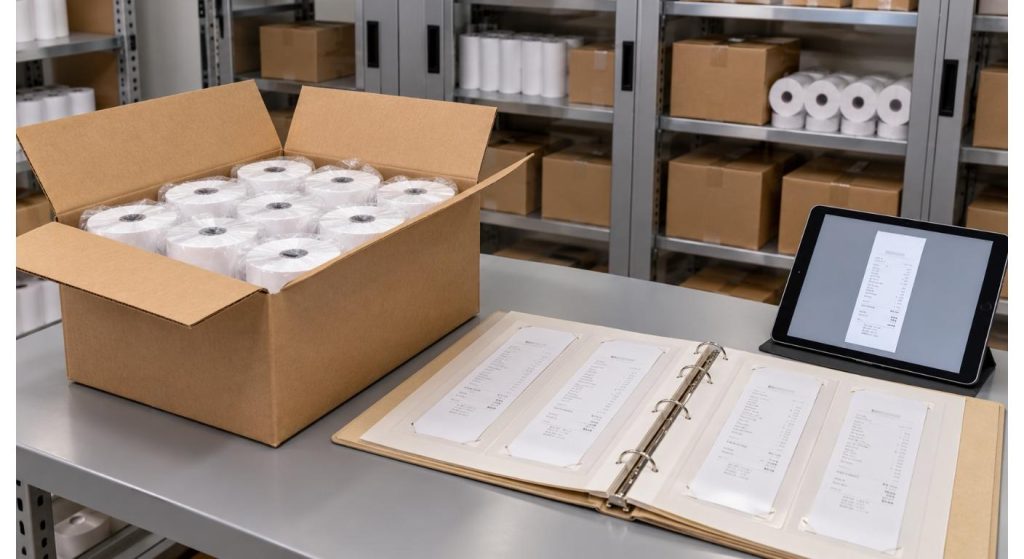
Develop a Product Range Based on Defined uses
Not all rolls need to be suitable for all environments. A more clearly defined set of paper grades is linked to a specific use, supporting equipment and established performance limits.
Print different types of transactions indoors or out of the way while reserving the use of additional image protection and/or specific documentation for certain applications. Custom printed thermal rolls should be examined if there is a need for branding and the print arrangement should maintain the desired area for transacting and feeding.
Have a technical reference for each item that includes the paper grade, Dimensies, convert needs and test results. If a customer complains about fading output or poor output, those records will help determine if it is due to a material change or storage or equipment conditions. They also help to make replacement recommendations more precise, as well as less reliant on the vague description of “premium white paper.”
| Complaint | Evidence to Collect |
| New prints appear pale | Printer model, settings, test file, and comparison roll |
| Stored receipts lose contrast | Print date, storage history, and contact materials |
| Paper feeds unevenly | Roll photographs, core condition, and loading video |
| Performance changes between deliveries | Batch references and retained samples |
Conclusie
A reliable thermal paper roll is the one that has the necessary coating characteristics, right physical properties, precise cutting and proper storage. Check these one by one and verify these all in use. By offering buyers a clearer understanding of the reasons for the performance difference, they can make more precise product specifications and provide customers with evidence-based product recommendations.
Veelgestelde vragen
Q1. Een "Scratch Test" is a test of thermal paper quality?
Nee. A dark mark may be an indication of a heat sensitive surface but it is not an indication of image life and/or printer compatibility. Printing with controlled prints and performance tests in relation.
Q2. Is "thicker" thermal paper necessarily superior?
Nee. Thickness should be appropriate for the printer and application. Other factors affecting performance include coating response, converting quality, and needed durability.
V3. Is there a need for ink in thermal paper?
Direct thermal printing is ink and ribbon free. It generates an image in the sensitive layer of the paper by applying heat.
Q4. Is all thermal paper suitable for tickets?
Nee. Ticketing equipment might require certain thickness, Sensing marks or Approved grades. Always read the equipment and application instructions.
V5. How long will a thermal print be readable?
The universal period for all the grades is not provided. Ask the manufacturer for the conditions under which the images are life and think about the actual storage and handling of the document.
We gaan terug naar binnen 24 Uren
Gerelateerde artikelen
Fabrikant van thermische papierrollen: Evalueer wat er gebeurt na de goedkeuring van het voorbeeld
2026-10-30
A4 Warmteoverdrachtspapier: Kies het juiste systeem voor kledingdrukwerk
2026-10-30
Thermisch Papier A4: Selecteer de juiste voorraad om onderweg te printen
2026-10-29
Papierrol Thermische Inventarisatie: Koppel de levering aan het echte gebruik
2026-10-29
